Exploring the latest innovations in high-power laser architecture and their applications in scientific research.
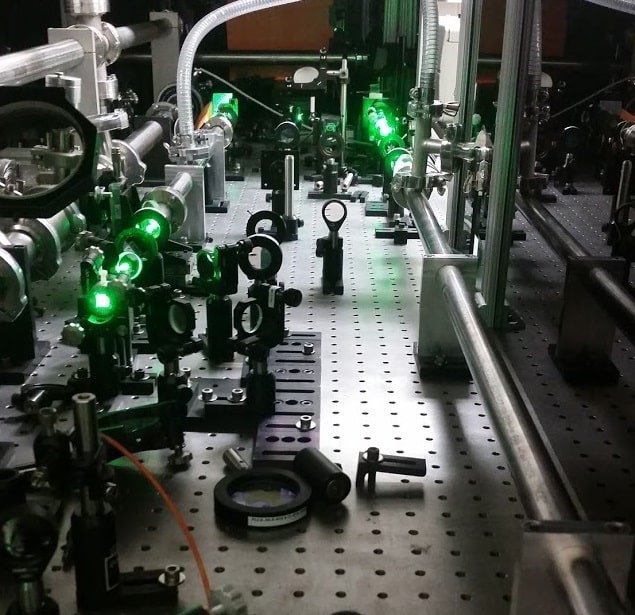
The quest for higher laser intensities has driven remarkable advancements in Terawatt (TW) and Petawatt (PW) laser systems. These systems are crucial for fundamental research in areas like particle acceleration, high-energy-density physics, and laboratory astrophysics. In this article, we delve into the key architectural innovations that are pushing the boundaries of what’s possible.
One of the most significant developments is the refinement of Optical Parametric Chirped Pulse Amplification (OPCPA). Unlike traditional Ti:Sapphire-based systems, OPCPA offers broader gain bandwidth, higher single-pass gain, and superior thermal management. This allows for the generation of shorter, more energetic pulses with excellent contrast. We’ll explore the trade-offs between different nonlinear crystals like LBO, BBO, and KDP, and how their properties influence the final output parameters.
Another critical area of innovation is in pump laser technology. The stability, beam quality, and efficiency of the pump lasers directly impact the performance of the entire system. Modern TW systems are increasingly relying on high-energy diode-pumped solid-state (DPSS) lasers. These pump sources provide the necessary energy and repetition rates while minimizing thermal issues, leading to more stable and reliable operation over long periods. We will discuss the transition from flashlamp-pumped systems to DPSS and the benefits this brings to the scientific community.